
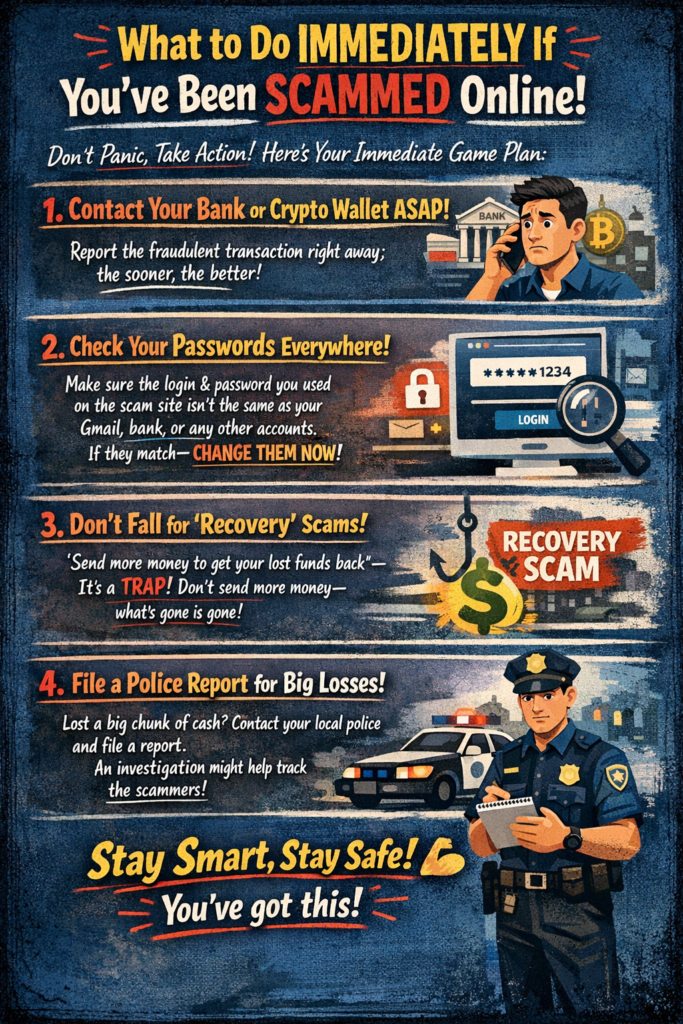
Getting scammed online is one of those experiences no one wants to go through, but unfortunately, it can happen to anyone — even the most careful internet users. And let’s be honest, it’s not just about losing money; it’s about feeling violated, tricked, and vulnerable. The good news? Acting quickly and smartly can help minimize damage and even prevent bigger problems down the road.
Here’s a step-by-step guide to what you should do immediately if you realize you’ve been scammed on a website.
1️⃣ Contact Your Bank or Crypto Wallet Immediately
The very first thing you should do is stop the bleeding. If you’ve sent money, whether through a bank transfer, credit card, or crypto transaction, contact your bank or wallet provider right away. Time matters here.
- Explain exactly what happened, including the website and transaction details.
- Ask them if the transaction can be reversed or frozen. Banks and crypto services often have fraud departments trained to handle these situations.
- Keep a record of all communications — screenshots, emails, or any reference numbers. These will be important if you escalate the issue later.
Even if the money seems gone for good, reporting it quickly gives you the best shot at recovery or at least documenting the fraud officially.
2️⃣ Secure Your Other Accounts
One of the biggest mistakes people make after being scammed is ignoring the passwords and usernames they used. Scammers often try to access other accounts if they can.
Here’s what to do:
- Check if the username or password you used on the scam website matches any of your other accounts — email, banking apps, social media, or online shopping.
- If there’s even a small chance of overlap, change those passwords immediately. Use unique passwords for every account.
- Consider enabling two-factor authentication (2FA) everywhere it’s available. This adds an extra layer of protection in case your login information gets stolen.
Remember: once scammers have your credentials, they may try to sneak into other areas of your digital life. Don’t give them that chance.
3️⃣ Never Send More Money
Scammers are masters of manipulation. One of their favorite tricks? Convincing victims that sending more money will “recover” what was lost.
Let’s be real: once your money is gone, it’s gone. Sending more just fuels the scam. Don’t fall for promises of fake refunds, processing fees, or secret recovery methods.
It’s painful, yes, but it’s better to stop here than to chase the illusion of getting your money back and ending up with even bigger losses.
4️⃣ Report to the Authorities for Large Amounts
If the amount lost is significant, consider involving law enforcement. Filing an official report can feel intimidating, but it’s worth it:
- Go to your local police station or cybercrime unit and explain the situation.
- Bring all evidence: emails, screenshots, transaction history, website links, and any messages from the scammer.
- An official investigation may not always recover your money, but it can prevent the scammers from targeting others and may even help in legal proceedings.
Remember, taking action also creates a documented trail that may protect you if the scam leads to further complications.
5️⃣ Learn From the Experience
Being scammed isn’t just about losing money — it’s a lesson in digital safety. Take a moment to reflect:
- What signs did you miss? Phishing emails, fake websites, unrealistic promises?
- How can you protect yourself next time? Consider password managers, verified payment methods, and more cautious verification of websites.
- Share your experience. Warning others about scams helps prevent similar situations.
Scammers rely on people staying quiet or feeling ashamed. Speaking up is powerful.
💡 Key Takeaways
- Act fast: Contact your bank or wallet immediately.
- Protect your other accounts: Change passwords and enable 2FA.
- Don’t chase lost money: Sending more funds is a trap.
- Use authorities for big losses: File a police or cybercrime report.
- Learn and share: Your experience can help others.
Remember, being scammed doesn’t mean you failed. It means the scammers were clever — but with the right steps, you can limit the damage, protect yourself, and prevent future incidents.
4️⃣ Go to the Authorities (Especially for Big Losses)
Lost a significant amount? File a report with your local police or cybercrime unit. Yes, it can feel daunting, but it’s worth it — you might recover something and prevent others from being scammed.
💡 Pro Tip: Always double-check websites before sending money and use unique passwords for every account. It might save you from a nightmare later.
Remember, scams can happen to anyone. What matters is how quickly you act and protect yourself next. Stay alert, stay safe!